
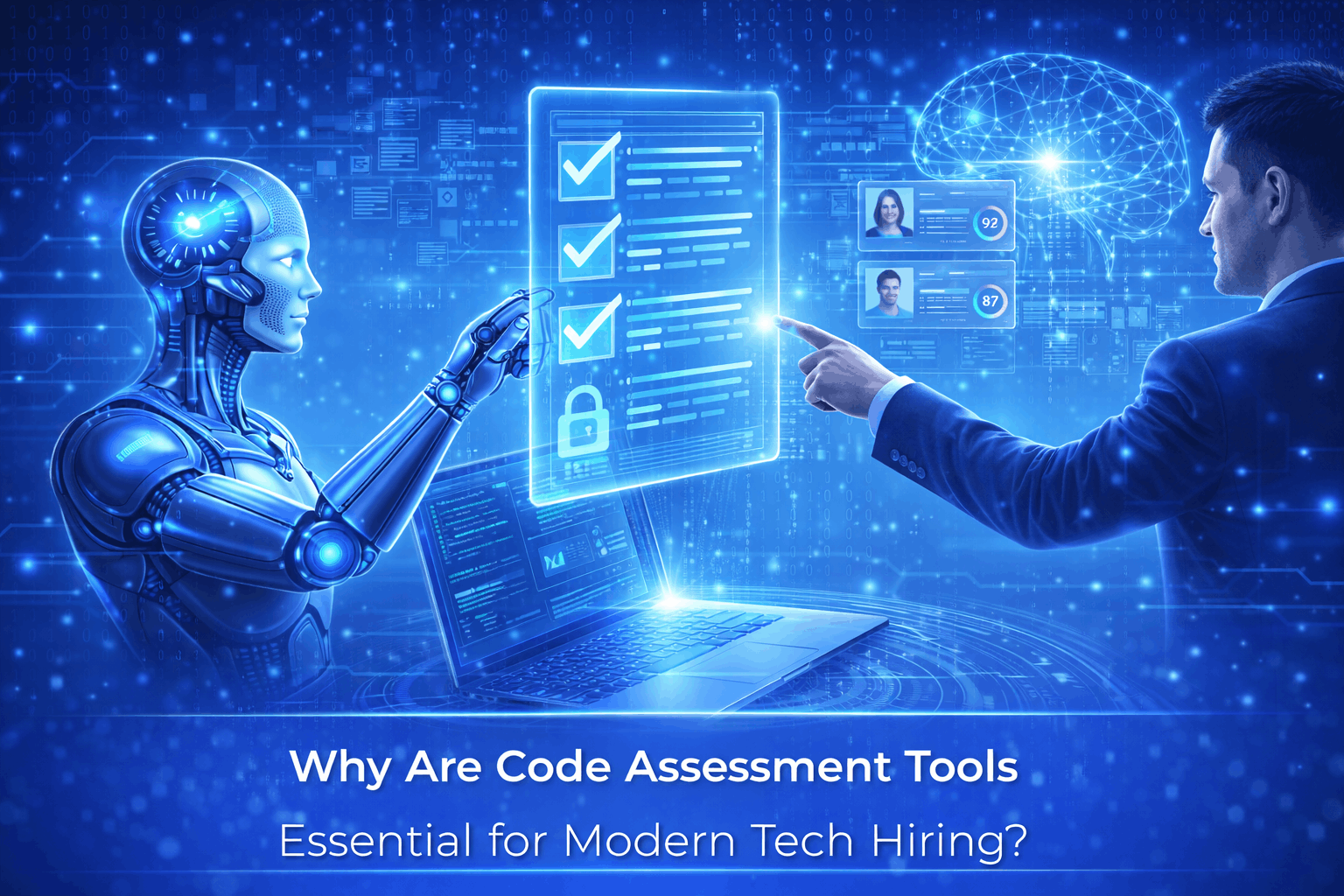
Identifying capable developers is time consuming, expensive, and is likely to result in poor hiring decisions. Code assessment tools eliminate these issues by offering objective and skills-based tests that show the real coding skills. This technology reduces the screening time up to 60 percent and increases the accuracy of hiring tremendously.
Resume screening in itself is not enough, and more than 70 percent of potential employees do not have the necessary expertise in technical positions. This frustrates HR teams that use hours to interview candidates who have no ability to do simple coding.
What Problems Do Code Assessment Tools Solve for HR Teams?
The time spent in manual screening is too long. HR departments waste hours reading through applications and holding preliminary interviews. Code assessment tools overcome these problems through automation of initial screening, standardized assessments, and objective skill measurements.
As distributed teams become the norm, organizations must be able to assess applicants without meeting in person. Traditional face-to-face tests of coding fail to scale to the global requirement of hiring.
Bad technical hires come at a cost of tens of thousands of dollars in training expenses, and replacement costs. Ineffective hiring practices affect the morale of the team and project schedules.
How Do Modern Assessment Platforms Improve Hiring Accuracy?
Quality assessment platforms integrate various technologies to ensure that the assessment of candidates is done in a fair and comprehensive manner.
- Real-Time Code Evaluation
Contemporary systems track applicants during code writing, recording keystroke, logic path and methodology. Video playback options allow the hiring managers to access candidate work sessions at a later time. This openness allows teams to be aware of how coding happens and identify strong problem-solvers versus those who might use shortcuts.
- AI-Powered Analysis
Artificial intelligence is currently able to detect suspicious patterns that could indicate cheating or AI-help. Smart algorithms identify plagiarism by similarities in the code of submissions. They raise red flags when there are suspiciously low completion rates or irregularities in the performance trends which are signs of dishonest actions.
- Job-Specific Test Creation
Code assessment tools allow HR departments to develop tailored assessments to specific job needs. Platform features such as role based templates that cover front-end code, back-end systems, data science and purpose-built frameworks are provided.
Features That Make Assessment Platforms Effective
Quality platforms have some key features that HR experts must consider when choosing code assessment tools. The hiring cycle normally accelerates by 40-60 percent in companies that adopt quality assessment platforms.
- Two-click test creation makes tests setup much more simple. HR teams are busy and require fast implementation without the technical complexity.
- Monitoring with AI identifies any suspicious activity such as the use of a different device, screen switching, and abnormal behavioral patterns. The technology makes remote assessments as secure as face-to-face assessments.
- Along with coding tests, aptitude, reasoning and behavioral fit must be assessed. Well-rounded candidates can be identified instead of technical experts.
- Recruitment systems must be linked to the available applicant tracking systems. The API access facilitates information transfer between hiring tools.
Common Assessment Types for Technical Hiring
- Coding problems involve applied skills via real-world problem situations. Applicants do not respond to conceptual queries but produce real code, which shows real skills in creating solutions.
- Aptitude tests are used to test logical thinking and problem solving skills needed in technical work. These tests measure reasoning patterns.
- The technical talent requires not only the coding skills but also communication skills to perform successfully in contemporary development environments.
- The cultural fit can be predicted through behavioral tests, which helps in identifying work preferences, team dynamics, and professional values.
Preventing AI-Assisted Cheating in Assessments
The emergence of AI-based tools such as ChatGPT also introduces new cheating issues in technical tests. Statistics indicate that 22% of job seekers confess to cheating online tests, 71% of them use Google and 37% refer to AI chatbots.
- Detection Strategies
Code assessment tools have several protection measures against AI assistance. Browser locks ensure that candidates do not access other resources when taking exams. Plagiarism checkers submit the work to huge databases that match copied or artificial intelligence solutions. Time tracking flags indicates speedy responses which implies outside help instead of authentic problem-solving.
- Assessment Design Approaches
Multi-step problems that require the explanation of reasoning processes are challenging to AI tools. Video responses used during live coding sessions confirm that the candidates are able to explain their thinking process. Interview questions on test solutions serve to follow-up on actual knowledge as opposed to memorized or artificial responses.
Conclusion
Code assessment tools turn technical hiring into data science. These platforms address some of the long-standing issues that HR departments encounter in seeking authentic technical talent in competitive markets.
CodexPro provides detailed evaluation solutions tailored to the HR and recruiting industry. It integrates two-clicks tests creation, the AI-based proctoring, and the role-based assessments into a single smooth system. Visit the platform today to experience features tailored to the needs of modern recruitment issues and start building stronger technical teams based on objective and skill-based assessments.