
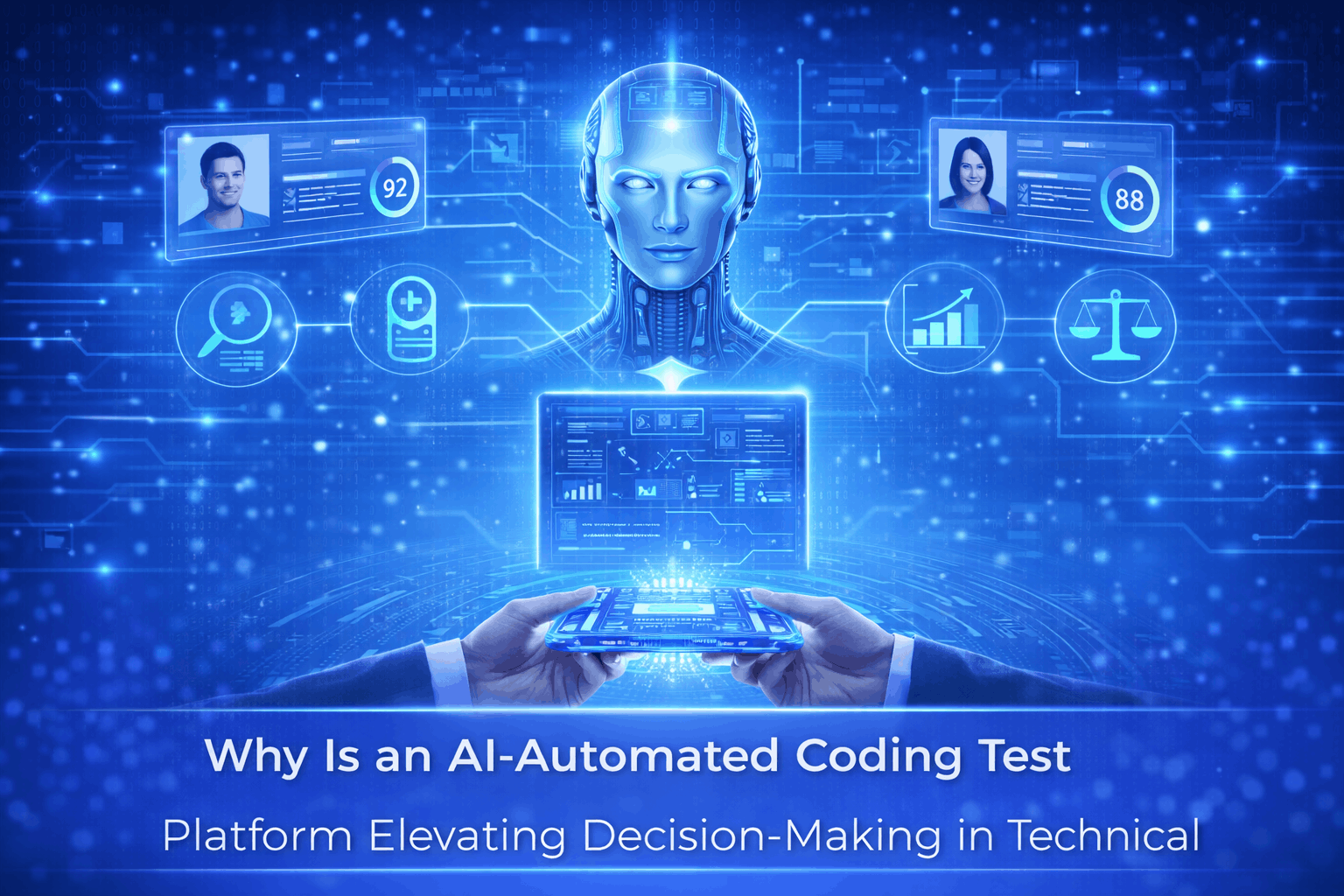
Technical hiring has evolved from its traditional methods, which relied on resume shortlisting and informal interviews. HR and recruitment professionals now face the responsibility to achieve fast yet fair and easily defensible hiring outcomes, which apply specifically to positions that directly affect product quality and business success. The AI-Automated coding test platform operates as a structured decision system that provides technical recruitment processes with clear and consistent elements that deliver quantifiable advantages.
The Shift from Intuition-based Hiring to Performance-based Evaluation
Traditional hiring depends on easily available signals like education, experience, or past employers, yet these rarely predict real on-the-job performance. The complexity of technical roles has rendered work performance indicators less effective as assessment tools. Modern hiring requires proof through performance.
The process of automated coding assessments tests actual problem-solving skills, which help HR departments decrease initial assessment doubts while developing better quality and more precise candidate lists.
Why are resumes and interviews now untrustworthy methods to assess coding skills?
Resumes show background, not real execution, while interviews often reward communication over technical depth. This hiring process creates risk because strong coders will get missed, and confident speakers will receive too much value.
The AI-Automated coding test platform solves this problem by assessing actual coding skills, which lets recruiters use direct job-related evidence to make their initial decisions instead of relying on their personal feelings.
An advanced assessment that goes beyond right or wrong answers
Basic coding tests check whether an answer works, but advanced platforms assess how solutions are developed. The process evaluates how well candidates break down problems, organise their code, and maintain efficiency while working under specific restrictions.
For HR teams, this depth converts complex technical performance into clear, standardised reports that highlight strengths, gaps, and overall role fit without reviewing raw code.
How does this reduce dependency on engineering teams?
Technical hiring processes require initial screening to be performed by engineering teams, which creates delays in recruitment because it takes away senior developers from their essential responsibilities.
The AI-Automated coding test platform uses automated testing for its initial assessments, which enables HR departments to conduct widespread candidate evaluation while engineers participate in detailed evaluation meetings that maintain evaluation standards.
Consistency as a foundation for fair and scalable hiring
The process of scaling hiring operations faces challenges because different assessment methods and interviewer assessments lead to employment bias problems, which create additional risk factors. Standardised coding assessments create a single evaluation framework across roles and locations, which ensures every candidate is judged by the same criteria to improve hiring decision fairness, compliance, and confidence.
Can standardised evaluation actually reduce bias?
The bias problem begins when interviewers make decisions based on their personal preference for particular backgrounds and communication methods. The AI-Automated coding test platform prevents this risk by conducting performance assessments. The evaluation of candidates shows their problem-solving abilities, which enables fair hiring practices that include all candidates without compromising technical requirements.
Supporting remote and distributed hiring models
Remote work has widened talent access but made assessments harder to manage across time zones, slowing hiring and increasing drop-offs. Automated coding tests enable asynchronous evaluation, allowing candidates to test on their schedule while recruiters review standardised results later.
The assessment process maintains its quality because the system enables candidates to participate from anywhere in the world while improving their overall experience.
Turning assessment data into long-term hiring intelligence
Hiring decisions should not exist in isolation. Assessment data shows continuous patterns that HR teams use to develop role requirements, benchmarks, and performance expectations. The AI-Automated coding test platform provides performance insights that help hiring managers work together better while making their final decisions with increased confidence.
The system selects candidates based on actual job performance, which reduces costs associated with hiring mistakes that occur over time.
Preparing hiring processes for evolving skill demands
The speed of technological progress exceeds the pace of traditional recruitment methods. The skills required for today will undergo changes within the next few months. Static assessments quickly become outdated. The advanced coding assessment platforms enable organisations to modify their evaluation standards according to their evolving business requirements.
The hiring process maintains its connection to modern technical standards through the combination of role-specific challenges and newly developed skill assessments.
Conclusion
Technical hiring now demands evidence, speed, and consistency. HR leaders can no longer rely on resumes and intuition to assess complex coding roles. The AI-Automated coding test platform provides a solution to this problem through its ability to conduct performance assessments, which deliver unbiased results across multiple tests. Companies now have a way to make their technical hiring process more efficient through CodexPro, which offers global recruitment solutions that enable better hiring decisions.